
A³ GNSS
Chipset Platform
Next-generation dependable autonomous
systems require absolute confidence in positioning.
SARDANA A³ GNSS chipset platform delivers trusted,
high-accuracy performance at a cost and power profile suitable for mass-market adoption.
Next-generation dependable autonomous systems require absolute confidence in positioning. SARDANA A³ GNSS chipset platform delivers trusted, high-accuracy performance at a cost and power profile suitable for mass-market adoption.
Next-generation dependable autonomous
systems require absolute confidence in positioning. SARDANA A³ GNSS chipset platform delivers trusted, high-accuracy performance at a cost and power profile suitable for mass-market adoption.
All-band,
all constellations
All-band,
all constellations
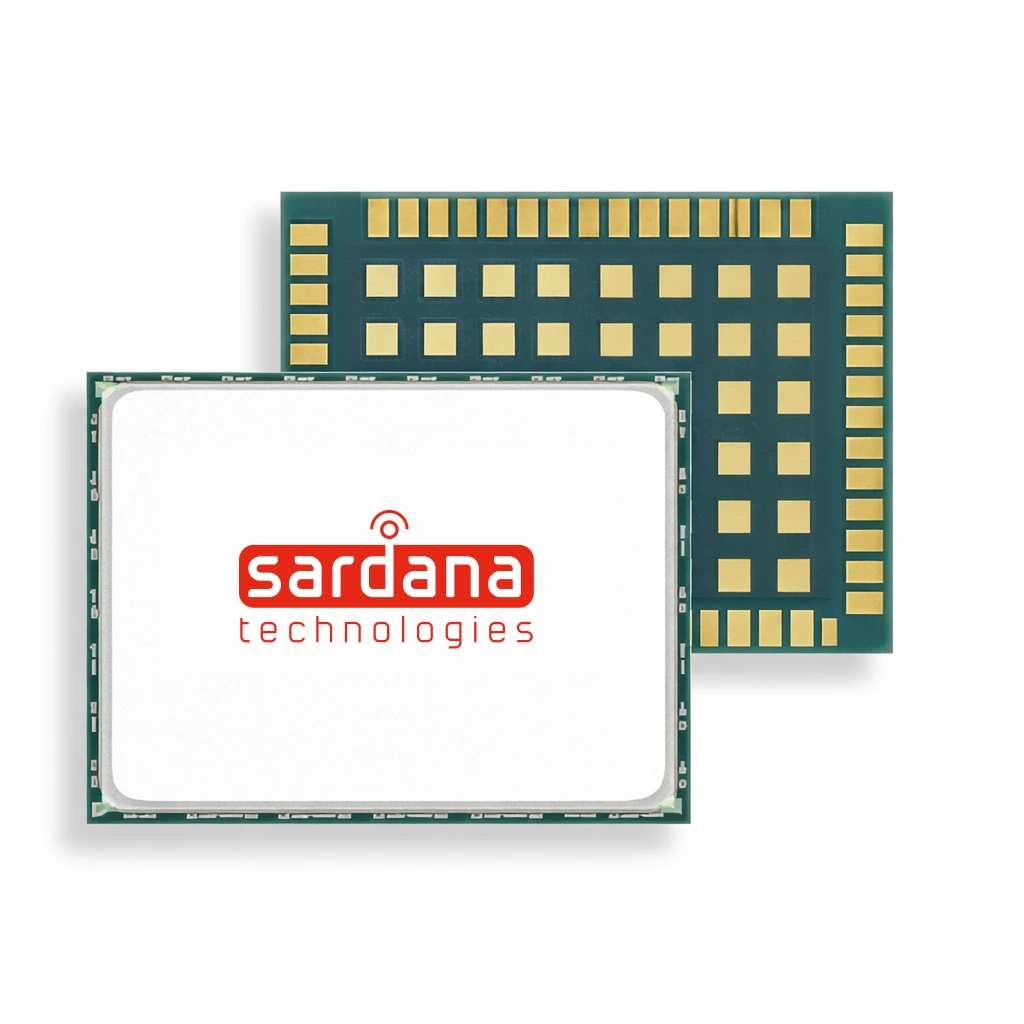
Today’s GNSS landscape spans multiple constellations transmitting across a variety of frequency bands. The more signals you process, the greater your accuracy and robustness. SARDANA A³ chipset tracks them all, equipping autonomous platforms with:
Today’s GNSS landscape spans multiple constellations transmitting across a variety of frequency bands. The more signals you process, the greater your accuracy and robustness. SARDANA A³ chipset tracks them all, equipping autonomous platforms with:
Today’s GNSS landscape spans multiple constellations transmitting across a variety of frequency bands. The more signals you process, the greater your accuracy and robustness. SARDANA A³ chipset tracks them all, equipping autonomous platforms with:
Today’s GNSS landscape spans multiple constellations transmitting across a variety of frequency bands. The more signals you process, the greater your accuracy and robustness. SARDANA A³ chipset tracks them all, equipping autonomous platforms with:
Stronger interference resistance enabled by adaptive digital filtering
Improved multipath mitigation with L5 support
Greater precision in challenging environments with RTK, PPP, and PPP-RTK corrections
Access to advanced high-accuracy services including Galileo HAS, QZSS CLAS, and BeiDou PPP-B2b, as well as Galileo OSNMA message authentication service
Scalable multi-antenna design tailored to application needs
Advanced spatial awareness and spoofing resistance
Lower system complexity compared to multi-receiver architectures
Accurate multi-antenna carrier-phase processing
Spoofing Resilience
Spoofing Resilience
Today, receivers capable of withstanding spoofing are largely limited to high-end professional systems. Even then, protection typically relies on analytical cross-checks of navigation data — an approach that cannot guarantee immunity against sophisticated attacks.
Our solution adds a stronger layer of defense by leveraging carrier-phase measurements from two or three antennas. By analyzing spatial phase relationships, we can detect and reject spoofing — even attacks that replicate an entire constellation at authentic signal power levels. This multi-antenna approach outperforms conventional CRPA systems, which are significantly more expensive and often ineffective below the noise floor.
read more
Today, receivers capable of withstanding spoofing are largely limited to high-end professional systems. Even then, protection typically relies on analytical cross-checks of navigation data — an approach that cannot guarantee immunity against sophisticated attacks.
Our solution adds a stronger layer of defense by leveraging carrier-phase measurements from two or three antennas. By analyzing spatial phase relationships, we can detect and reject spoofing — even attacks that replicate an entire constellation at authentic signal power levels. This multi-antenna approach outperforms conventional CRPA systems, which are significantly more expensive and often ineffective below the noise floor.
read more

Scalable Design
Scalable Design
A³ chipset delivers true dual- or triple-antenna operation in a compact module form-factor, lowering receiver cost, size, and power consumption.
A³ chipset delivers true dual- or triple-antenna operation in a compact module form-factor, lowering receiver cost, size, and power consumption.

Scalable multi-antenna design tailored to application needs
Scalable multi-antenna design tailored to application needs
Scalable multi-antenna design tailored to application needs

Advanced spatial awareness and spoofing resistance
Advanced spatial awareness and spoofing resistance
Advanced spatial awareness and spoofing resistance

Lower system complexity compared to multi-receiver architectures
Lower system complexity compared to multi-receiver architectures
Lower system complexity compared to multi-receiver architectures

Accurate multi-antenna
carrier-phase processing
Accurate multi-antenna
carrier-phase processing
Accurate multi-antenna
carrier-phase processing
Spatial Awareness
Spatial Awareness
Our platform enables dual- and triple-antenna ADU operation by simply scaling the number of RF front-end ICs within a compact module, with one centralized digital processor performing synchronized carrier-phase computations across all antennas.
The result is a full 3D attitude determination with sub-degree precision. The added geometric diversity improves solution stability, accelerates ambiguity fixing, and enhances resilience against multipath and signal manipulation. For vessels operating in confined ports, during docking, or under dynamic positioning, this added robustness translates directly into safer and more controlled maneuvering.
read more
Our platform enables dual- and triple-antenna ADU operation by simply scaling the number of RF front-end ICs within a compact module, with one centralized digital processor performing synchronized carrier-phase computations across all antennas.
The result is a full 3D attitude determination with sub-degree precision. The added geometric diversity improves solution stability, accelerates ambiguity fixing, and enhances resilience against multipath and signal manipulation. For vessels operating in confined ports, during docking, or under dynamic positioning, this added robustness translates directly into safer and more controlled maneuvering.
read more

SARDANA A³ RF
SARDANA A³ RF
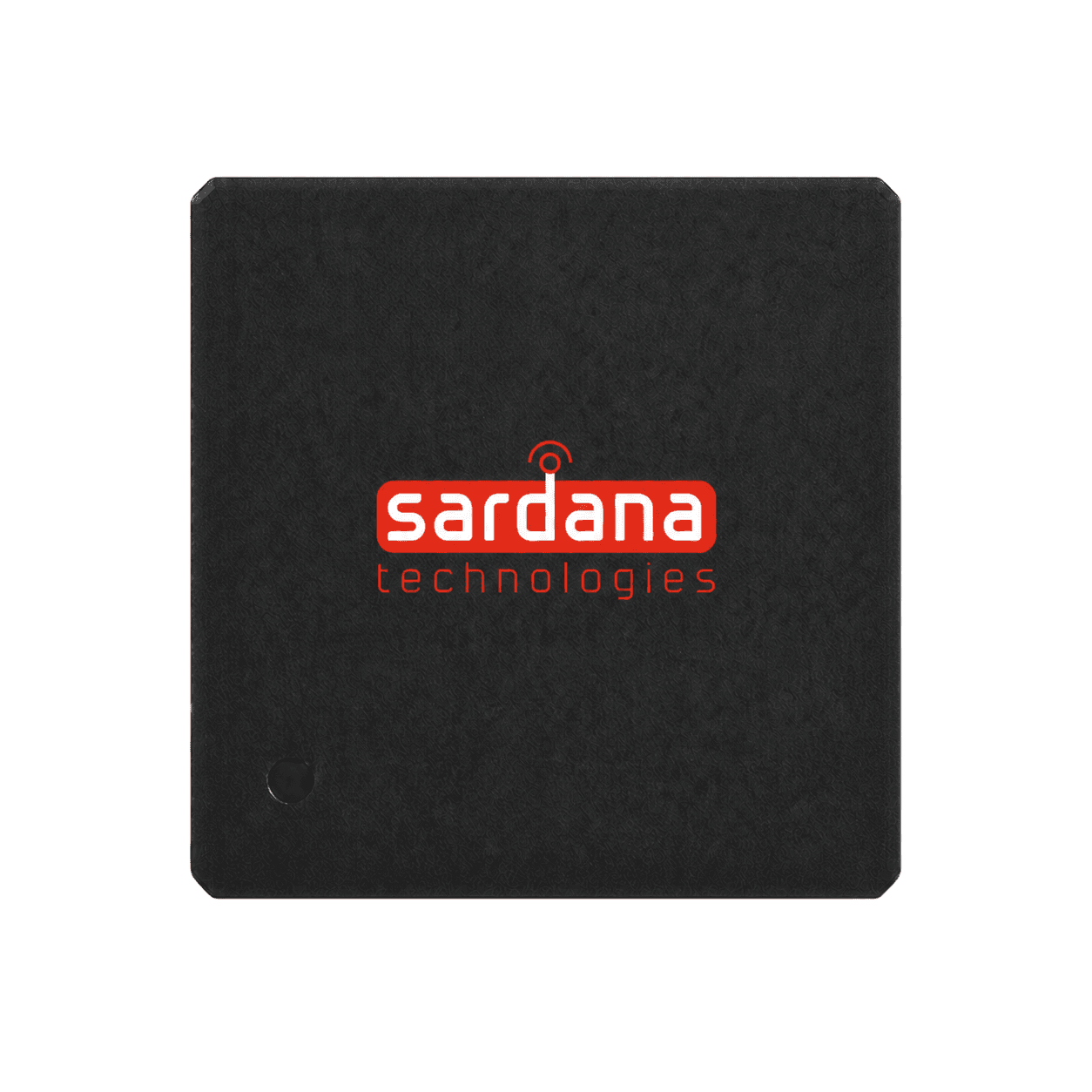
SARDANA A³ RF is a 3-channel RF Front-End IC designed
to receive signals of all GNSS constellations at a full spectrum
of frequency bands, due to its extended bandwidth. A highly-
integrated RF FE IC can be used in various mobile applications
requiring high precision positioning. Each A³ RF channel has its own independent frequency synthesizer sharing one common reference (TCXO) input (Fref).
SARDANA A³ RF is a 3-channel RF Front-End IC designed to receive signals of all GNSS constellations at a full spectrum of frequency bands, due to its extended bandwidth. A highly-integrated RF FE IC can be used in various mobile applications requiring high precision positioning. Each A³ RF channel has its own independent frequency synthesizer sharing one common reference (TCXO) input (Fref).
SARDANA A³ RF is a 3-channel RF Front-End IC designed
to receive signals of all GNSS constellations at a full spectrum of frequency bands, due to its extended bandwidth. A highly-integrated RF FE IC can be used in various mobile applications requiring high precision positioning. Each A³ RF channel has its own independent frequency synthesizer sharing one common reference (TCXO) input (Fref).
SARDANA A³ RF is a 3-channel RF Front-End IC designed to receive signals of all GNSS constellations at a full spectrum of frequency bands, due to its extended bandwidth. A highly-integrated RF FE IC can be used in various mobile applications requiring high precision positioning. Each A³ RF channel has its own independent frequency synthesizer sharing one common reference (TCXO) input (Fref).
SARDANA A³ RF is a 3-channel RF Front-End IC designed
to receive signals of all GNSS constellations at a full spectrum of frequency bands, due to its extended bandwidth. A highly-integrated RF FE IC can be used in various mobile applications requiring high precision positioning. Each A³ RF channel has its own independent frequency synthesizer sharing one common reference (TCXO) input (Fref).
SARDANA A³ RF is a 3-channel RF Front-End IC designed to receive signals of all GNSS constellations at a full spectrum of frequency bands, due to its extended bandwidth. A highly-
integrated RF FE IC can be used in various mobile applications requiring high precision positioning. Each A³ RF channel has its own independent frequency synthesizer sharing one common reference (TCXO) input (Fref).
Specifications
Specifications
Signals received:
GPS: L1 C/A, L1C, L1P(Y), L2C, L2P(Y), L5
Galileo: E1B/C, E5a, E5b, E5-AltBOC, E6B/C
BeiDou: B1I, B1C, B2a, B2b, B2I, B3I
QZSS: L1 C/A, L1C, L1 C/B, L1S, L2C, L5, L6LEX
NavIC: L1, L5, S-band
SBAS: L1 C/A, L5
Signal bandwidth up to 70 MHz supports
high precision services
Signals received:
GPS: L1 C/A, L1C, L1P(Y), L2C, L2P(Y), L5
Galileo: E1B/C, E5a, E5b, E5-AltBOC, E6B/C
BeiDou: B1I, B1C, B2a, B2b, B2I, B3I
QZSS: L1 C/A, L1C, L1 C/B, L1S, L2C, L5, L6LEX
NavIC: L1, L5, S-band
SBAS: L1 C/A, L5Signal bandwidth up to 70 MHz supports
high precision services
Signals received:
GPS: L1 C/A, L1C, L1P(Y), L2C, L2P(Y), L5
Galileo: E1B/C, E5a, E5b, E5-AltBOC, E6B/C
BeiDou: B1I, B1C, B2a, B2b, B2I, B3I
QZSS: L1 C/A, L1C, L1 C/B, L1S, L2C, L5, L6LEX
NavIC: L1, L5, S-band
SBAS: L1 C/A, L5
Signal bandwidth up to 70 MHz supports high precision services
Signals received:
GPS: L1 C/A, L1C, L1P(Y), L2C, L2P(Y), L5
Galileo: E1B/C, E5a, E5b, E5-AltBOC, E6B/C
BeiDou: B1I, B1C, B2a, B2b, B2I, B3I
QZSS: L1 C/A, L1C, L1 C/B, L1S, L2C, L5, L6LEX
NavIC: L1, L5, S-band
SBAS: L1 C/A, L5
Signal bandwidth up to 70 MHz supports
high precision services
3 independent configurable channels, each including preamplifier, image rejection mixer, IF filter, variable-gain IFA with output signal buffer
Noise figure 5dB
Low power consumption (150mW per channel) and power economy mode
10x10mm QFN88 package
Easy integration through a C driver delivered with full source code access
3 independent configurable channels, each including preamplifier, image rejection mixer, IF filter, variable-gain IFA with output signal buffer
Noise figure 5dB
Low power consumption (150mW per channel) and power economy mode
10x10mm QFN88 package
Easy integration through a C driver delivered with full source code access
3 independent configurable channels, each including preamplifier, image rejection mixer, IF filter, variable-gain IFA with output signal buffer
Noise figure 5dB
Low power consumption (150mW per channel) and power economy mode
10x10mm QFN88 package
Easy integration through a C driver delivered with full source code access
SARDANA A³ DC
SARDANA A³ DC
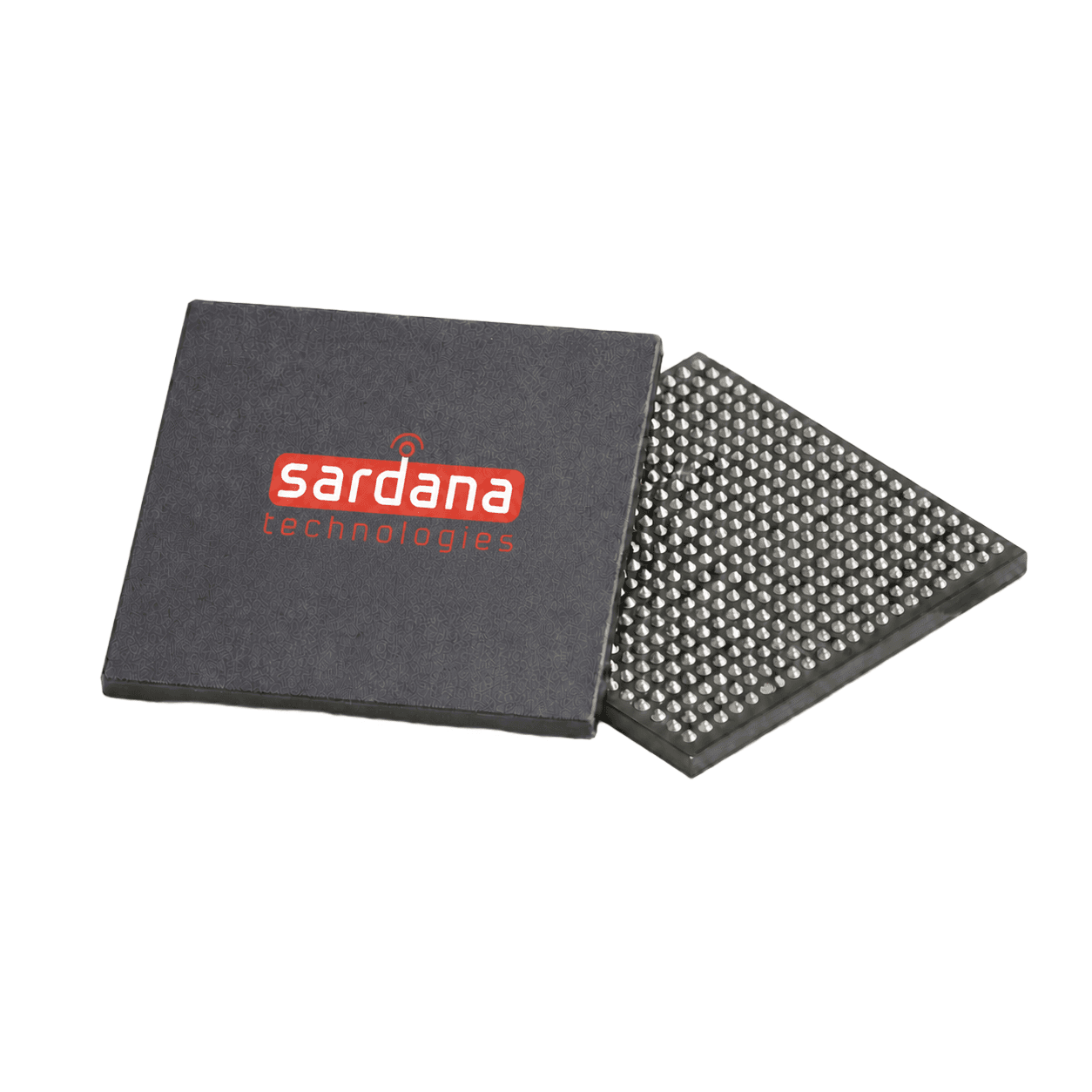
SARDANA A³ DC is a GNSS digital processor designed
to deliver precise, reliable positioning with built-in resilience against spoofing. Advanced RTK, PPP, and PPP-RTK algorithms provide centimeter-level accuracy. A single SoC can process signals from up to three antennas simultaneously, enabling excellent ADU accuracy and advanced spoofing mitigation.
SARDANA A³ DC is a GNSS digital processor designed to deliver precise, reliable positioning with built-in resilience against spoofing. Advanced RTK, PPP, and PPP-RTK algorithms provide centimeter-level accuracy. A single SoC can process signals from up to three antennas simultaneously, enabling excellent ADU accuracy and advanced spoofing mitigation.
SARDANA A³ DC is a GNSS digital processor designed to deliver precise, reliable positioning with built-in resilience against spoofing. Advanced RTK, PPP, and PPP-RTK algorithms provide centimeter-level accuracy. A single SoC can process signals from up to three antennas simultaneously, enabling excellent ADU accuracy and advanced spoofing mitigation.
SARDANA A³ DC is a GNSS digital processor designed to deliver precise, reliable positioning with built-in resilience against spoofing. Advanced RTK, PPP, and PPP-RTK algorithms provide centimeter-level accuracy. A single SoC can process signals from up to three antennas simultaneously, enabling excellent ADU accuracy and advanced spoofing mitigation.
SARDANA A³ DC is a GNSS digital processor designed to deliver precise, reliable positioning with built-in resilience against spoofing. Advanced RTK, PPP, and PPP-RTK algorithms provide centimeter-level accuracy. A single SoC can process signals from up to three antennas simultaneously, enabling excellent ADU accuracy and advanced spoofing mitigation.
Specifications
Specifications
A full spectrum of GNSS signals support provides access to high precision correction services including Galileo HAS (E6), BeiDou PPP-B2b, MADOCA-PPP, QZSS CLAS PPP-RTK (L6 LEX)
1600-channel navigation engine powered by 4 CPU cores with on-chip RAM and internal ADCs
Advanced RTK, PPP, PPP-RTK algorithms
Up to 200Hz position update rate ensures continuous service
A full spectrum of GNSS signals support provides access to high precision correction services including Galileo HAS (E6), BeiDou PPP-B2b, MADOCA-PPP, QZSS CLAS PPP-RTK (L6 LEX)
1600-channel navigation engine powered by 4 CPU cores with on-chip RAM and internal ADCs
Advanced RTK, PPP, PPP-RTK algorithms
Up to 200Hz position update rate ensures continuous service
A full spectrum of GNSS signals support provides access to high precision correction services including Galileo HAS (E6), BeiDou PPP-B2b, MADOCA-PPP, QZSS CLAS PPP-RTK (L6 LEX)
1600-channel navigation engine powered by 4 CPU cores with on-chip RAM and internal ADCs
Advanced RTK, PPP, PPP-RTK algorithms
A full spectrum of GNSS signals support provides access to high precision correction services including Galileo HAS (E6), BeiDou PPP-B2b, MADOCA-PPP, QZSS CLAS PPP-RTK (L6 LEX)
1600-channel navigation engine powered by 4 CPU cores with on-chip RAM and internal ADCs
Advanced RTK, PPP, PPP-RTK algorithms
Up to 200Hz position update rate ensures continuous service
Spoofing resiliency by comparing carrier-phase measurements across 2 or 3 antennas
0.2° heading, pitch, and roll accuracy (RMS) per 1 m baseline at standstill
Multi-frequency adaptive notch filters to suppress industrial noise
Fin-FET sub-micron CMOS technology for balanced SWAP-C
Spoofing resiliency by comparing carrier-phase measurements across 2 or 3 antennas
0.2° heading, pitch, and roll accuracy (RMS) per 1 m baseline at standstill
Multi-frequency adaptive notch filters to suppress industrial noise
Fin-FET sub-micron CMOS technology for balanced SWAP-C
Up to 200Hz position update rate ensures continuous service
Spoofing resiliency by comparing carrier-phase measurements across 2 or 3 antennas
0.2° heading, pitch, and roll accuracy (RMS) per 1 m baseline at standstill
Multi-frequency adaptive notch filters to suppress industrial noise
Fin-FET sub-micron CMOS technology for balanced SWAP-C